
As a parent, you prioritize your child's health and well-being. Regular checkups, including dental and medical appointments, are essential components of preventive care. However, you might overlook the importance of routine eye exams. Pediatric eye exams are crucial for detecting and addressing potential vision problems early. Our team at Mind-Body-World Optometry in Scarsdale would like to look at how pediatric eye exams can help protect your child’s vision.
Why Are Pediatric Eye Exams Important?
• Early detection: Regular eye exams can identify vision issues like nearsightedness, farsightedness, astigmatism, or lazy eye at an early stage.
• Impact on development: Undetected vision problems can hinder your child's learning, social development, and overall confidence.
• Preventative care: Addressing vision issues early can prevent future complications which undermine a child’s confidence and self-esteem in the classroom.
What to Expect During a Pediatric Eye Exam
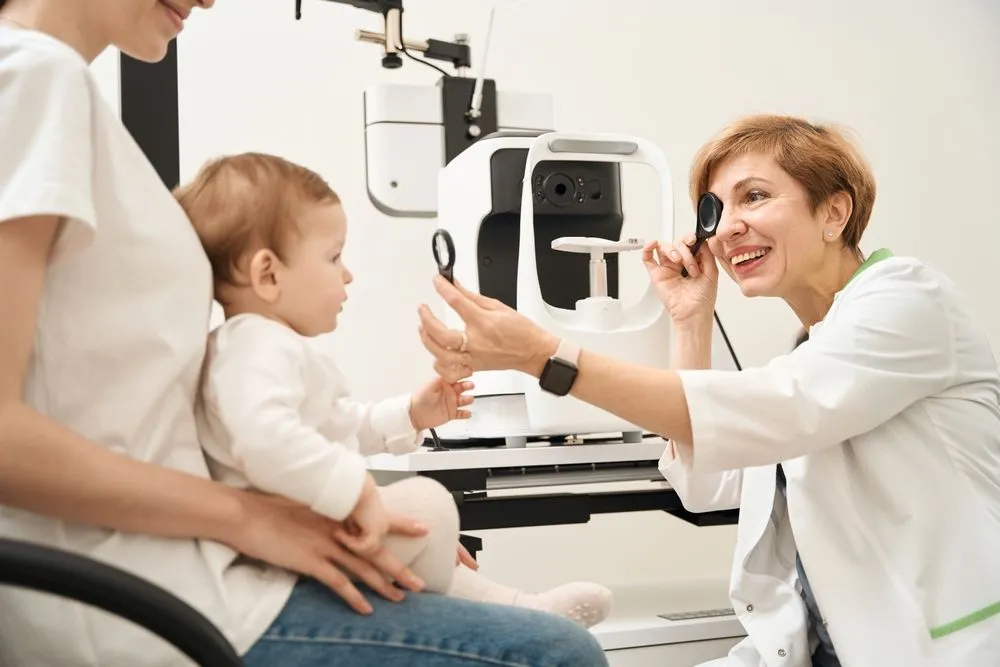
A typical pediatric eye exam at Mind-Body-World Optometry includes:
• Case history: Gathering information about your child's developmental history, medical history, and early interventions. The doctor probes for signs of vision problems which may be apparent in the child’s behavior, visual-motor development milestones, and signs of visual discomfort. Family history and eye-health concerns are also addressed.
• Visual acuity testing: Assessing your child's ability to see clearly at various distances, with both eyes together and with each eye alone. A deficit in one or both eyes may indicate a risk for lazy eye (amblyopia).
• Eye alignment testing: Checking for any degree of eye misalignment (strabismus) as well as signs of interference with eye-teaming (binocularity).
• Eye movement testing: Evaluating how well your child can direct their eyes. This includes holding the eyes steady, following moving objects, and shifting the eyes between stationary objects (oculomotor control). Children with gross motor and fine motor developmental challenges often have oculomotor challenges as well.
• Eye health evaluation: Examining the internal and external structures of the eyes.
• Refractive testing: Determining the power of the child's eyes (“refractive state”), and whether prescription glasses are needed to see clearly with either eye alone, or both eyes as a team. Beyond identifying nearsightedness, farsightedness, and astigmatism, this includes assessment for anisometropia, a difference between the power of the two eyes, which can lead to the development of amblyopia (lazy eye) and/or strabismus (an eye turn).
• Accommodative testing: Determining how well your child can sustain clear vision at near-point, shift the focus of the eyes between near-point and distance, and exploring whether prescription glasses will benefit their ability to maintain attention in the classroom (or other learning environments).
When Should Your Child Have Their First Eye Exam?
The American Academy of Pediatrics recommends a comprehensive eye exam for all children between the ages of 6 months and 3 years. As a public service, Dr. Slotnick offers free InfantSee® Evaluations before the first birthdate, after the age of 6 months.
Following a first exam, well children should have follow-up exams annually to monitor visual development as demands increase. When concerns are identified or glasses are prescribed, the doctor may recommend more frequent monitoring.
The Importance of Early Intervention
Early detection and treatment of vision problems are crucial for your child's development and overall well-being. Addressing sources of visual interference at a young age can prevent future complications and ensure your child's success in school and other activities. A comprehensive pediatric eye and vision evaluation will not only identify refractive issues (like nearsightedness, farsightedness, astigmatism, and anisometropia), but also functional vision concerns, like amblyopia (lazy eye), binocular vision dysfunction, oculomotor dysfunction, and accommodative dysfunction.
Common Vision Problems in Children
Some common vision problems that can affect children include:
• Nearsightedness: Difficulty seeing objects far away.
• Farsightedness: Excessive effort required for seeing objects at near-point as well as long-distance. This may be missed on pediatric and school screenings!
• Astigmatism: Blurred or distorted vision, which is not quite sharp at any distance.
• Strabismus: Misalignment of the eyes, also known as crossed eyes or wall-eyes.
• Amblyopia: Reduced vision in one eye due to underdevelopment of the visual pathway, also known as lazy eye.
• Anisometropia: Difference in eye powers between the two eyes, which may lead to strabismus or amblyopia.
• Convergence Insufficiency: Difficulty with eye-teaming at near-point, which may present as unstable vision, words moving on the page, doubling of words or letters; this often leads to eyestrain, headaches, or avoidance of sustained attention in the classroom.
• Oculomotor Dysfunction: Difficulty with eye-tracking skills, whether at near-point or distance. This may present as poor eye-hand coordination, clumsiness, fear or avoidance of sports and activities. In the classroom, this presents as loss of place when reading, re-reading, skipping words or lines, and interference with spatial organization skills with writing or drawing.
• Accommodative Infacility or Insufficiency: Difficulty with accurate focusing control. This typically presents as intermittent blurry vision at near-point, or a delay when re-focusing from near to distance viewing.
Signs and Symptoms of Vision Problems in Children
• Squinting or rubbing eyes frequently.
• Difficulty reading or focusing on close objects.
• Complaints of headaches or blurry vision.
• Tilting or turning the head with visual attention.
• Closing or covering an eye.
• Sensitivity to light.
• Avoiding activities that require sustained attention for near-point (within arms’ reach).
• Avoiding activities that require good eye-hand coordination.
• Academic performance does not match expectation based on earlier signs of development and curiosity.
The Role of Pediatric Optometrists
Pediatric optometrists specialize in providing comprehensive eye and vision care for children. They are trained to use age-appropriate techniques and create a comfortable environment to ensure that your child's eye exam is a positive experience.
Schedule an Appointment with Mind-Body-World Optometry
Are you looking for an eye doctor near you? At Mind-Body-World Optometry in Scarsdale, NY, our experienced pediatric optometrist is dedicated to providing the highest quality eye care for your child. We offer comprehensive eye exams, vision therapy, and prescriptions for eyewear to address any vision concerns. Don't wait for your child to complain of vision problems. Schedule an appointment with Dr. Slotnick today to safeguard their vision and ensure they have the best possible foundation for success.